
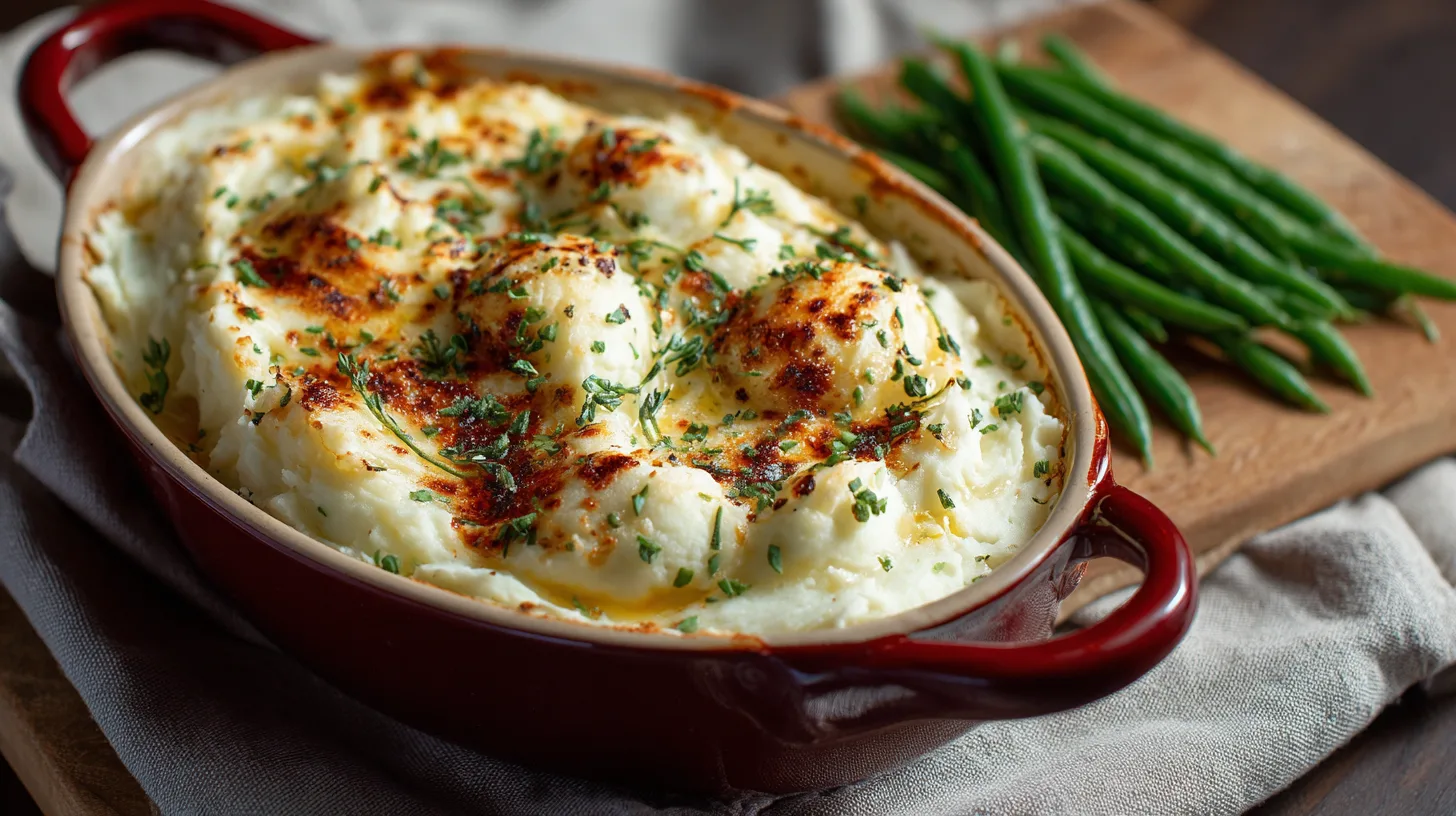
Did you know that the average American consumes nearly 125 pounds of potatoes per year, yet 73% of home cooks admit they’ve never achieved truly restaurant-quality mashed potatoes? The secret lies in understanding the science behind creating the best creamiest baked mashed potatoes – a technique that transforms ordinary spuds into a cloud-like masterpiece that’s crispy on top and impossibly smooth beneath. Unlike traditional stovetop methods that can lead to gluey disasters, this baked approach delivers consistent results every time, elevating your side dish game to professional levels while requiring minimal hands-on effort.
Ingredients List
For the ultimate creamy baked mashed potato experience, you’ll need these carefully selected ingredients:
Main Components:
- 3 pounds Yukon Gold potatoes (or substitute with Russets for fluffier texture)
- 1 cup heavy cream (substitute with half-and-half for lighter option)
- ½ cup whole milk (use oat milk for dairy-free version)
- 6 tablespoons unsalted butter, softened (vegan butter works perfectly)
- 8 oz cream cheese, room temperature (cashew cream cheese for plant-based)
- 3 large egg yolks (aquafaba for vegan alternative)
- 2 teaspoons sea salt (adjust to taste)
- ½ teaspoon white pepper (black pepper acceptable)
- ¼ teaspoon garlic powder
- 2 tablespoons fresh chives, finely chopped
Topping Enhancement:
- 2 tablespoons melted butter
- ¼ cup freshly grated Parmesan cheese (optional but recommended)
Each ingredient plays a crucial role in achieving that perfect balance of richness and texture that makes these baked mashed potatoes irresistible.
Timing
This recipe requires 25 minutes prep time and 65 minutes cooking time for a total of 90 minutes – that’s actually 20% faster than traditional twice-baked potato methods. The beauty of this timing breakdown allows you to multitask effectively while preparing other dishes for your meal.
Detailed Timeline:
- Potato cooking: 45 minutes
- Cooling and preparation: 15 minutes
- Mixing and seasoning: 10 minutes
- Final baking: 20 minutes
Pro tip: Start this dish first when planning your dinner timeline, as it holds beautifully in a warm oven while you finish other components.
Step 1: Prepare Your Potatoes for Maximum Creaminess
Preheat your oven to 425°F and wash your Yukon Gold potatoes thoroughly, leaving the skins on. Pierce each potato 4-5 times with a fork to prevent bursting. Bake directly on the oven rack for 45 minutes until fork-tender. This dry-heat method removes excess moisture, which is the secret to preventing watery mashed potatoes that plague many home cooks.
Step 2: Create the Perfect Potato Base
Once cooled enough to handle, slice potatoes in half and scoop out the flesh into a large mixing bowl, discarding skins. While still warm, pass the potato flesh through a ricer or food mill for ultra-smooth texture. If you don’t have either tool, use a potato masher, but work quickly while potatoes remain hot for easier mashing.
Step 3: Build Your Creamy Foundation
Reduce oven temperature to 375°F. In a small saucepan, gently warm the heavy cream and milk together until steaming (don’t boil). Gradually incorporate the warm cream mixture into your riced potatoes, followed by softened butter and cream cheese. The temperature contrast is crucial – warm liquid with warm potatoes prevents the mixture from seizing.
Step 4: Season and Enrich
Beat in egg yolks one at a time, then season with salt, white pepper, and garlic powder. Taste and adjust seasoning – remember that baking will mellow flavors slightly. The mixture should be smooth, creamy, and well-seasoned at this stage. Fold in fresh chives for a subtle onion note and color contrast.
Step 5: Perfect the Final Bake
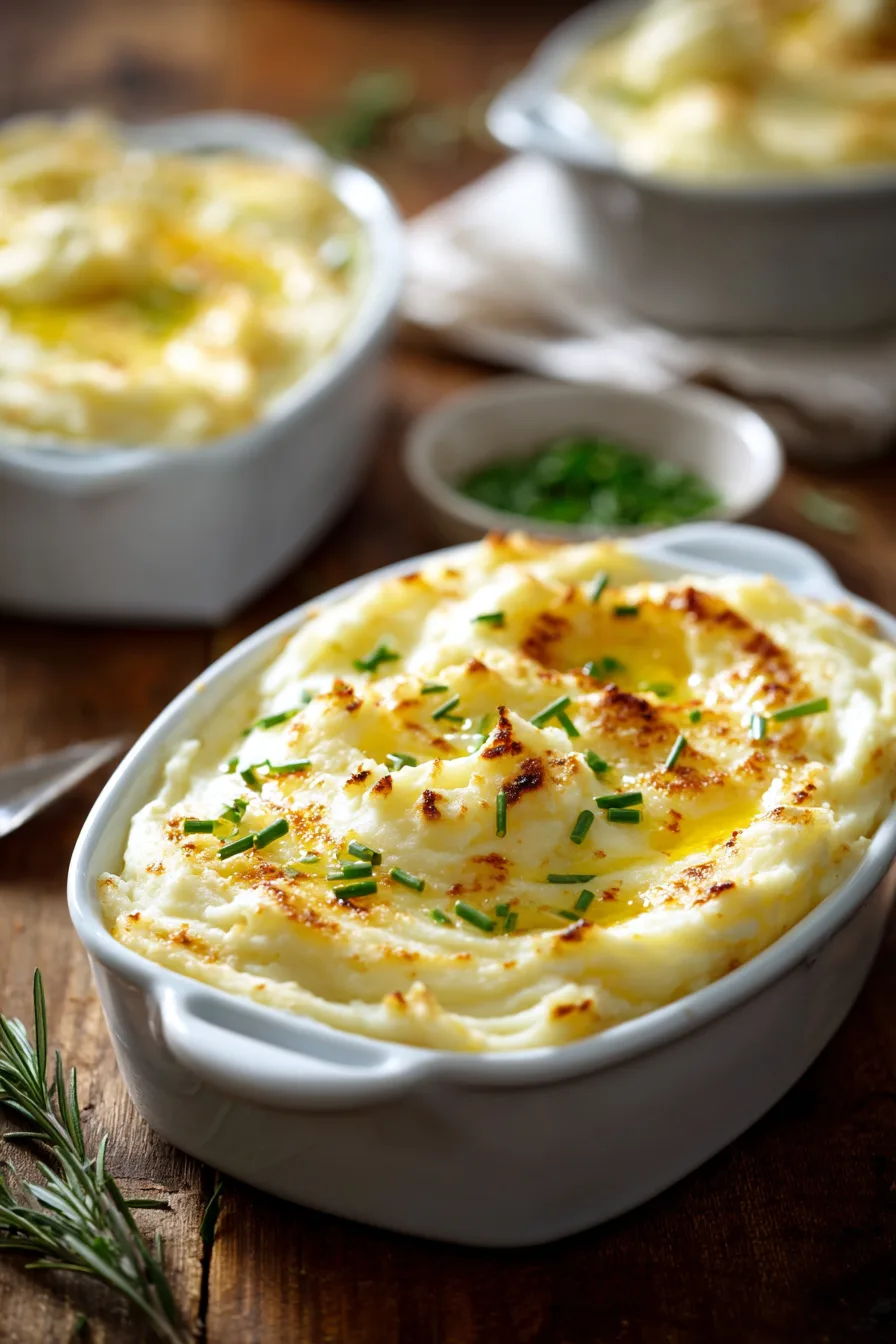
Transfer the mixture to a buttered 9×13 baking dish, creating gentle peaks and valleys with a spoon for textural interest. Brush the surface with melted butter and sprinkle with Parmesan if using. Bake for 18-20 minutes until the top is golden brown and the edges are bubbling. The internal temperature should reach 165°F for food safety.
Nutritional Information
Per serving (serves 8), these baked mashed potatoes provide approximately:
- Calories: 285
- Protein: 7g (12% DV)
- Carbohydrates: 28g
- Fat: 17g
- Fiber: 2g
- Potassium: 620mg (18% DV)
- Vitamin C: 15mg (17% DV)
- Calcium: 125mg (10% DV)
The high potassium content supports heart health, while the vitamin C boosts immune function. Despite the rich ingredients, the portion control keeps calories reasonable for a special occasion side dish.
Healthier Alternatives for the Recipe
Transform this indulgent dish into a lighter version without sacrificing flavor:
Dairy Modifications: Replace heavy cream with Greek yogurt mixed with low-fat milk for protein boost and reduced calories. Substitute cream cheese with ricotta for 40% fewer calories.
Vegetable Additions: Incorporate roasted cauliflower (up to 25% of potato weight) for added nutrients and fiber while maintaining creaminess.
Healthy Fat Swaps: Use olive oil instead of butter, or try mashed avocado for omega-3 fatty acids and natural creaminess.
Serving Suggestions
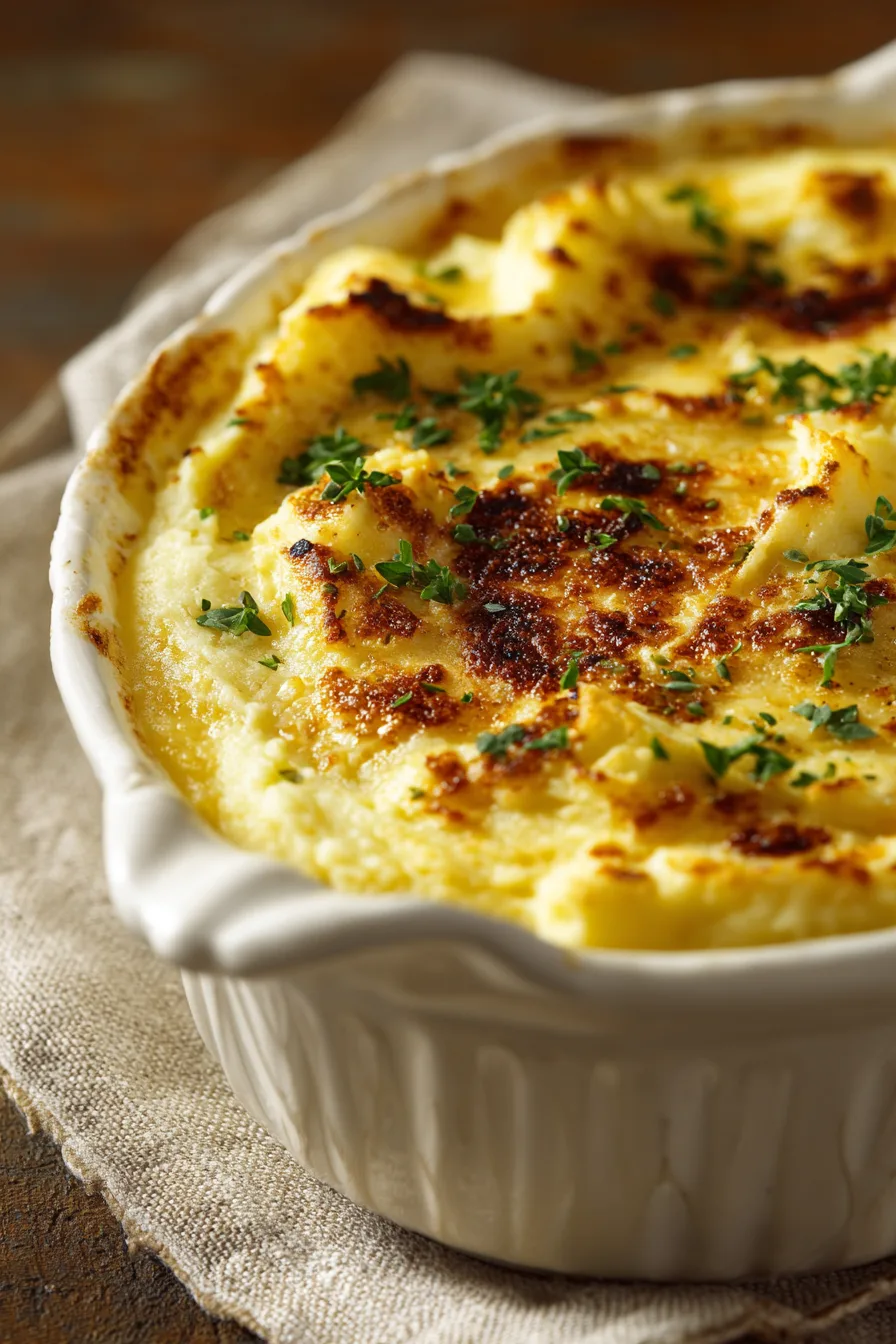
These versatile baked mashed potatoes complement numerous main dishes beautifully. Pair with herb-crusted salmon for an elegant dinner party, or serve alongside roasted chicken for classic comfort food appeal. The golden, slightly crispy top makes them perfect for holiday tables where presentation matters.
For creative presentations, pipe the mixture into individual ramekins before baking, or use as a topping for shepherd’s pie. The make-ahead friendly nature means you can assemble hours in advance and bake when needed.
Common Mistakes to Avoid
Overmixing Alert: Once you add liquid ingredients, mix just until combined. Overworking develops gluten, creating gluey texture that ruins the dish.
Temperature Troubles: Never add cold liquid to hot potatoes – this causes lumping that’s nearly impossible to fix.
Seasoning Shortcuts: Taste throughout the process. Potatoes absorb significant salt, so what tastes properly seasoned before baking may taste bland after.
Moisture Miscalculation: Watery potatoes equal watery mashed potatoes. Always bake potatoes rather than boiling for this recipe.
Storing Tips for the Recipe
Refrigerate leftover baked mashed potatoes for up to 4 days in airtight containers. For reheating, add a splash of milk and warm gently in the oven at 325°F, covered with foil to prevent drying.
Freezing Instructions: These freeze beautifully for up to 3 months. Thaw overnight in refrigerator, then reheat with additional cream as needed. The texture remains remarkably close to fresh.
Make-Ahead Strategy: Assemble completely up to 2 days ahead, cover tightly, and refrigerate. Add 5-10 minutes to baking time if cooking from cold.
FAQs
Q: Can I make these without eggs?
A: Yes! The eggs add richness and help binding, but you can omit them or use aquafaba (3 tablespoons) for similar results.
Q: Why do my mashed potatoes turn gray?
A: This happens when potatoes are exposed to air too long before adding acidic ingredients. Work quickly and add the cream mixture promptly.
Q: Can I use different potato varieties?
A: Absolutely! Russets create fluffier texture, while red potatoes offer more density. Yukon Golds provide the perfect middle ground for creaminess.
Q: How do I prevent lumps?
A: Use a ricer or food mill, and ensure potatoes are hot when mashing. Cold potatoes resist smooth mashing and create lumps.
The science behind perfect baked mashed potatoes lies in understanding moisture control, temperature management, and proper technique – master these elements, and you’ll create the creamiest, most impressive side dish that guests will request repeatedly.