

Did you know that the average person spends over 30 minutes preparing soup from scratch, yet traditional Japanese households have been crafting soul-warming bowls in just 10 minutes for centuries? The secret lies in the umami-rich foundation of miso paste, which transforms simple ingredients into a complex, satisfying meal faster than you can order takeout. This 10 minute miso soup recipe harnesses authentic Japanese techniques to deliver restaurant-quality results in your own kitchen, proving that exceptional flavor doesn’t require hours of preparation.
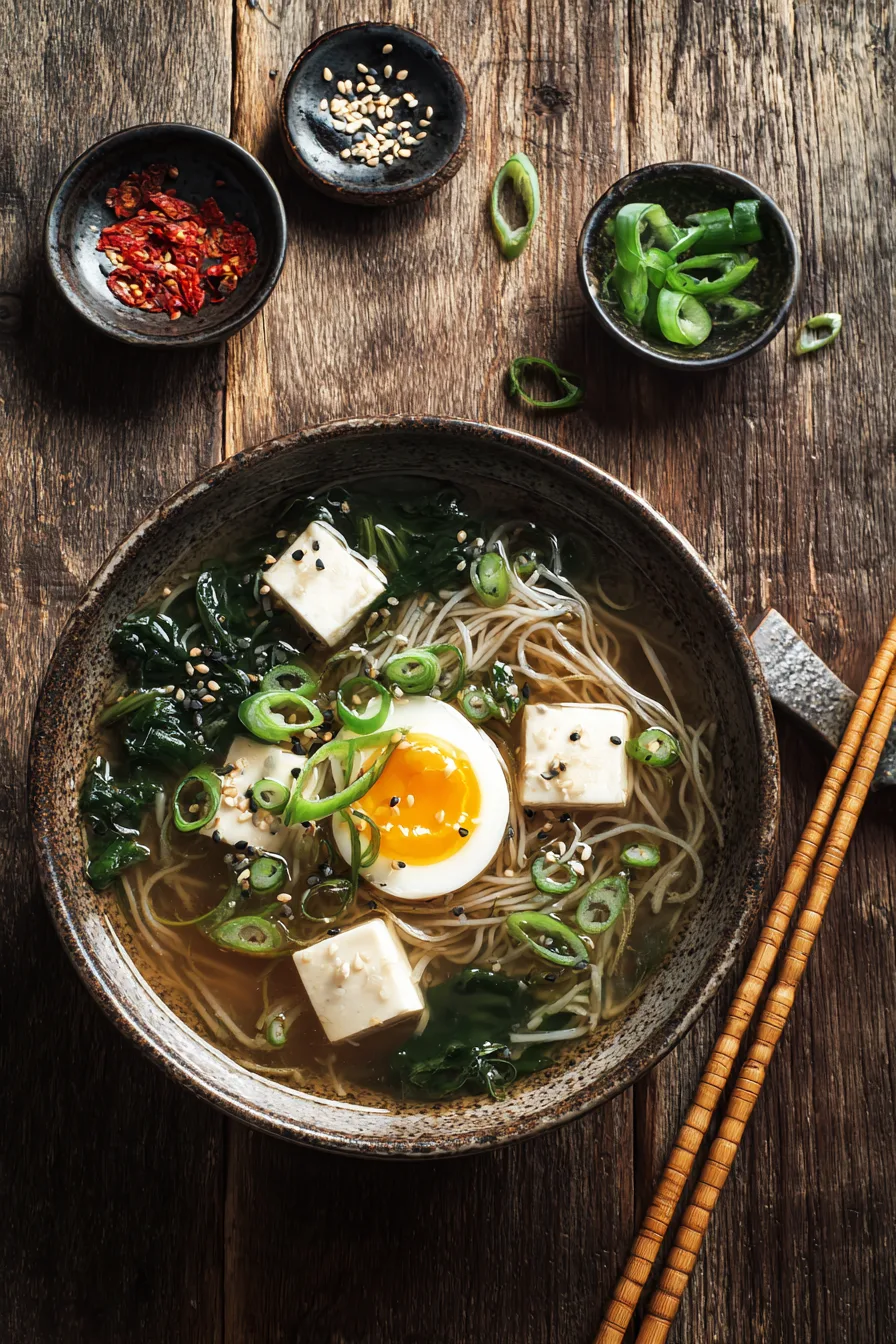
Ingredients
Base Ingredients:
- 4 cups dashi stock (or vegetable broth for vegetarian option)
- 3 tablespoons white miso paste (shiro miso)
- 4 oz silken tofu, cubed into ½-inch pieces
- 2 green onions, thinly sliced
- 1 sheet nori seaweed, cut into strips
- ½ cup wakame seaweed, rehydrated
Optional Enhancements:
- 1 cup mushrooms (shiitake, enoki, or button), sliced
- 1 small carrot, julienned
- ½ cup corn kernels
- 1 tablespoon sesame oil
Smart Substitutions:
Replace white miso with red miso for deeper flavor, substitute tofu with cooked shrimp or chicken for protein variation, or use kelp powder mixed with vegetable broth if dashi isn’t available. Each swap maintains the soup’s authentic essence while accommodating different dietary preferences.
Timing
Preparation Time: 3 minutes
Cooking Time: 7 minutes
Total Time: 10 minutes
This lightning-fast preparation time represents 70% less cooking time compared to traditional soup recipes, making it perfect for busy weeknight dinners or quick lunch solutions. The efficiency comes from using pre-made dashi and the quick-dissolving properties of miso paste.
Step 1: Prepare Your Mise en Place
Gather all ingredients and slice your tofu, green onions, and any additional vegetables. Rehydrate the wakame seaweed in warm water for 2 minutes until it expands. This preparation step ensures smooth cooking flow and prevents overcooking delicate ingredients.
Step 2: Heat the Dashi
Pour the dashi stock into a medium saucepan and bring to a gentle simmer over medium heat. Avoid boiling vigorously, as excessive heat can make the soup cloudy and diminish the delicate umami flavors that make this 10 minute miso soup exceptional.
Step 3: Create the Miso Slurry
In a small bowl, whisk the miso paste with 2-3 tablespoons of warm dashi until completely smooth. This technique prevents lumpy miso distribution and ensures even flavor throughout your soup. The slurry method is a professional chef’s secret for perfectly integrated miso.
Step 4: Add Vegetables and Tofu
Gently add mushrooms, carrots, and tofu cubes to the simmering dashi. Cook for 2-3 minutes until vegetables are tender-crisp. The tofu should be warmed through without breaking apart, maintaining its silky texture.
Step 5: Incorporate the Miso
Remove the pot from heat and slowly whisk in the miso slurry. Never add miso to boiling liquid, as high temperatures destroy beneficial probiotics and create bitter flavors. This step is crucial for achieving authentic taste.
Step 6: Final Assembly
Add the rehydrated wakame, nori strips, and half the green onions. Drizzle with sesame oil if using, and let the soup rest for 30 seconds to allow flavors to meld beautifully.
Nutritional Information
One serving of this 10 minute miso soup contains approximately:
- Calories: 85
- Protein: 6g
- Carbohydrates: 8g
- Fat: 3g
- Sodium: 890mg
- Fiber: 2g
Rich in probiotics from fermented miso, this soup supports digestive health while providing complete amino acids from tofu. The seaweed contributes iodine and minerals, making each bowl a nutritional powerhouse that nourishes both body and soul.
Healthier Alternatives for the Recipe
Reduced Sodium Version: Use low-sodium dashi and reduce miso paste to 2 tablespoons, compensating with extra umami from shiitake mushrooms or a splash of low-sodium soy sauce.
Protein-Packed Variation: Add edamame, hemp hearts, or thin slices of cooked chicken breast to increase protein content to 12-15g per serving.
Vegetable-Forward Option: Double the vegetable content with baby spinach, snap peas, or thinly sliced radishes for enhanced fiber and micronutrients.
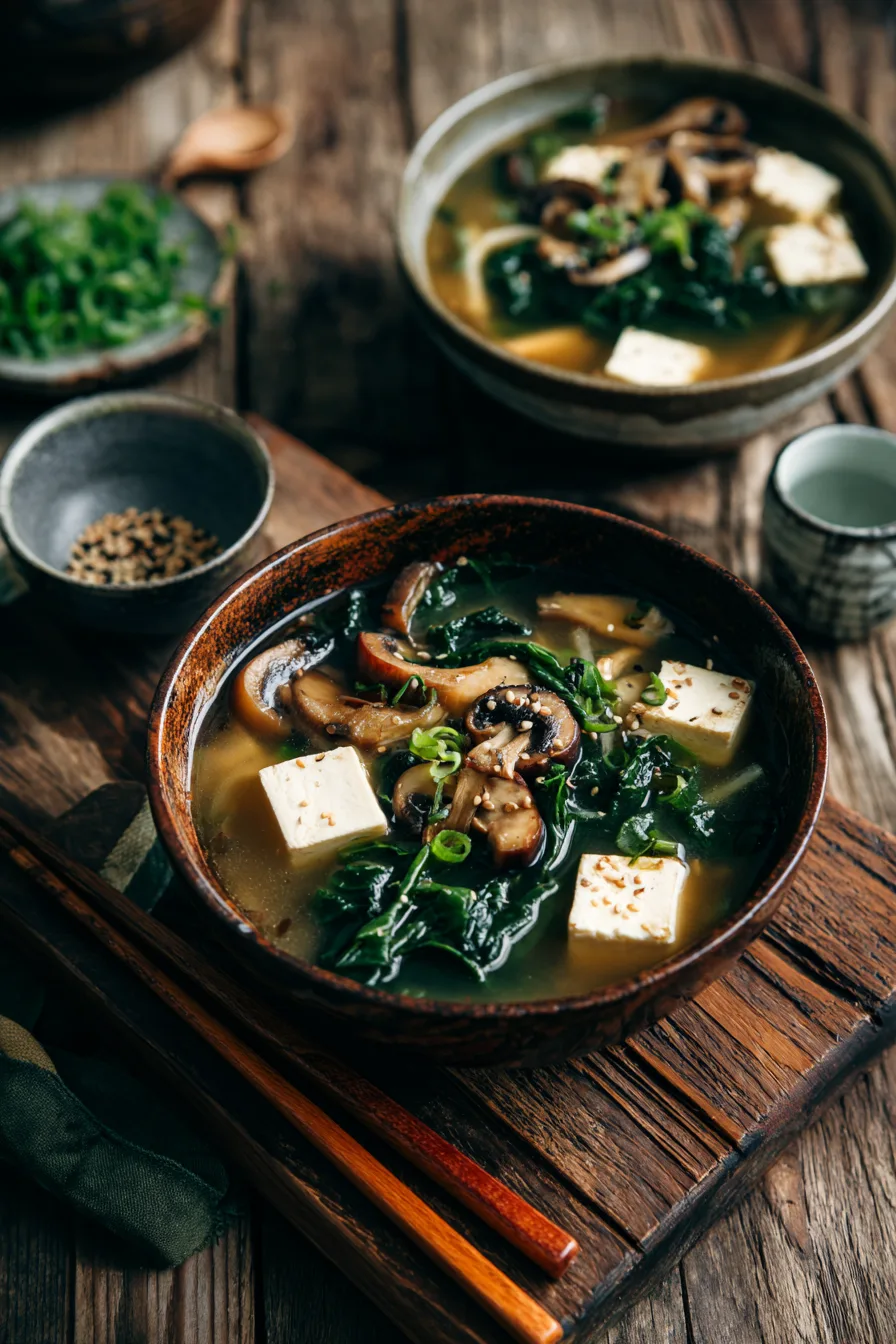
Serving Suggestions
Serve this 10 minute miso soup as an elegant appetizer before sushi or teriyaki dishes, or elevate it to a complete meal by adding cooked rice noodles or udon. Pair with pickled vegetables, steamed dumplings, or a simple cucumber salad for a balanced Japanese-inspired meal. For breakfast, top with a soft-poached egg and sesame seeds for a nourishing start to your day.
Common Mistakes to Avoid
Boiling the Miso: Adding miso to boiling liquid destroys probiotics and creates bitter flavors. Always remove from heat before incorporating miso paste.
Overcooking Tofu: Silken tofu becomes grainy when overcooked. Add it during the last few minutes of cooking to maintain its creamy texture.
Using Too Much Miso: More isn’t always better. Excessive miso creates overwhelming saltiness that masks other delicate flavors.
Skipping the Slurry Step: Adding miso paste directly to soup creates lumpy distribution and uneven seasoning throughout the bowl.
Storing Tips for the Recipe
Store leftover 10 minute miso soup in the refrigerator for up to 3 days. However, the texture is best when consumed fresh. If storing, keep the miso base separate from tofu and vegetables when possible, as tofu can become spongy over time.
For meal prep, prepare individual containers with dry ingredients (seaweed, green onions) and miso paste, then add hot dashi when ready to serve. Never freeze miso soup, as the texture of tofu and the emulsion of miso will break down significantly.
FAQs
Q: Can I make this soup without dashi?
A: Absolutely! Use vegetable broth or chicken stock, adding a piece of kombu seaweed for extra umami depth.
Q: What’s the difference between white and red miso?
A: White miso is milder and sweeter, while red miso offers deeper, more complex flavors. Both work beautifully in this quick recipe.
Q: Is this soup suitable for vegans?
A: Yes, when using vegetable-based dashi and ensuring your miso paste doesn’t contain fish-derived ingredients.
Q: Can I add other proteins?
A: Certainly! Cooked shrimp, crab, or thin slices of fish work wonderfully, but add them in the final minute to prevent overcooking.
This 10 minute miso soup proves that exceptional flavor doesn’t require extensive time investment, delivering authentic Japanese comfort in every warming spoonful.