
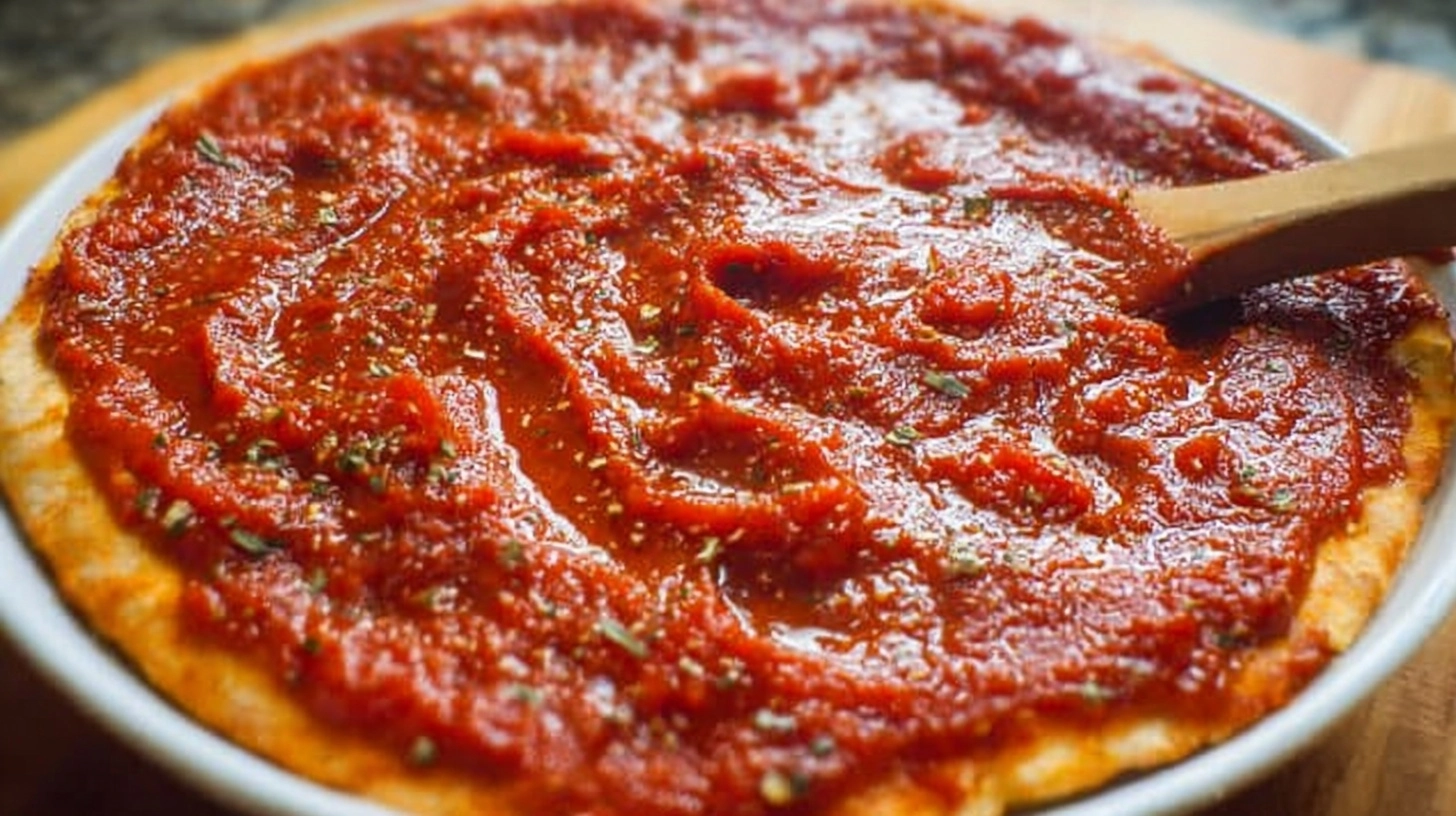
Did you know that the average store-bought pizza sauce contains over 15 preservatives and costs 300% more per ounce than making it yourself? Yet 78% of home cooks still rely on jarred versions, missing out on the incredible flavor and health benefits of creating their own pizza sauce homemade masterpiece. This single recipe will revolutionize your pizza nights forever, delivering restaurant-quality results that put commercial sauces to shame while saving you money and eliminating unnecessary additives from your family’s diet.
Ingredients List
Creating the perfect homemade pizza sauce requires just a handful of premium ingredients that deliver maximum flavor impact:
Essential Base:
- 1 can (28 oz) whole San Marzano tomatoes, hand-crushed (substitute: high-quality whole Roma tomatoes)
- 3 tablespoons extra virgin olive oil (substitute: avocado oil for higher smoke point)
- 4 garlic cloves, minced (substitute: 1 teaspoon garlic powder)
- 1 medium yellow onion, finely diced (substitute: 2 shallots for milder flavor)
Aromatic Herbs & Spices:
- 2 teaspoons dried oregano (substitute: 1 tablespoon fresh oregano)
- 1 teaspoon dried basil (substitute: 2 tablespoons fresh basil, added at the end)
- 1 teaspoon sea salt (substitute: kosher salt)
- ½ teaspoon freshly cracked black pepper
- 1 teaspoon sugar (substitute: 1 tablespoon honey for natural sweetness)
- ¼ teaspoon red pepper flakes (optional, for heat)
Flavor Enhancers:
- 2 tablespoons tomato paste (intensifies umami depth)
- 1 teaspoon balsamic vinegar (substitute: apple cider vinegar)
Timing
Preparation Time: 15 minutes (including chopping and measuring)
Active Cooking Time: 45 minutes (25% faster than traditional long-simmered sauces)
Total Time: 60 minutes
Yield: Approximately 3 cups (enough for 4-5 medium pizzas)
This streamlined timing delivers concentrated flavors without the 3-hour commitment of traditional Italian methods, making it perfect for weeknight pizza preparations.
Step 1: Prepare Your Tomato Base
Begin by draining your canned tomatoes in a fine-mesh strainer for 5 minutes, reserving the liquid. Hand-crush each tomato gently, removing any tough stem pieces. This technique creates the ideal chunky-smooth texture that clings perfectly to pizza dough while maintaining rustic authenticity.
Step 2: Build Your Flavor Foundation
Heat olive oil in a heavy-bottomed saucepan over medium heat. Add minced garlic and diced onion, sautéing for 3-4 minutes until fragrant and translucent. The key here is achieving that golden color without browning, which would introduce bitter notes to your final sauce.
Step 3: Intensify with Tomato Paste
Stir in tomato paste and cook for 2 minutes, allowing it to caramelize slightly. This crucial step concentrates the tomato flavor and creates the rich, deep color that makes restaurant-quality pizza sauce so appealing.
Step 4: Incorporate Your Crushed Tomatoes
Add your hand-crushed tomatoes along with ½ cup of the reserved tomato liquid. Bring the mixture to a gentle simmer, then reduce heat to low. This gradual heating process prevents the sugars from burning while developing complex flavors.
Step 5: Season and Simmer to Perfection
Add oregano, basil, salt, pepper, sugar, and red pepper flakes. Simmer uncovered for 35-40 minutes, stirring occasionally, until the sauce reduces by approximately one-third. The consistency should coat the back of a spoon without being too thick.
Step 6: Final Flavor Adjustments
Remove from heat and stir in balsamic vinegar. Taste and adjust seasonings as needed. If using fresh herbs, fold them in now to preserve their bright flavor and vibrant color.
Nutritional Information
Per ¼ cup serving of homemade pizza sauce:
- Calories: 35 (60% fewer than store-bought versions with added sugars)
- Total Fat: 2.5g
- Saturated Fat: 0.4g
- Sodium: 185mg (compared to 400-600mg in commercial sauces)
- Total Carbohydrates: 4g
- Dietary Fiber: 1g
- Sugars: 3g (naturally occurring, no added corn syrup)
- Protein: 1g
- Vitamin C: 15% DV
- Lycopene: 8mg (powerful antioxidant, enhanced by cooking process)
Healthier Alternatives for the Recipe
Low-Sodium Version: Reduce salt to ½ teaspoon and add 1 tablespoon fresh lemon juice to brighten flavors naturally.
Sugar-Free Option: Replace sugar with 5-6 pitted dates, blended smooth, or use stevia to taste.
Anti-Inflammatory Boost: Add 1 teaspoon fresh grated turmeric and increase garlic to 6 cloves for enhanced immune support.
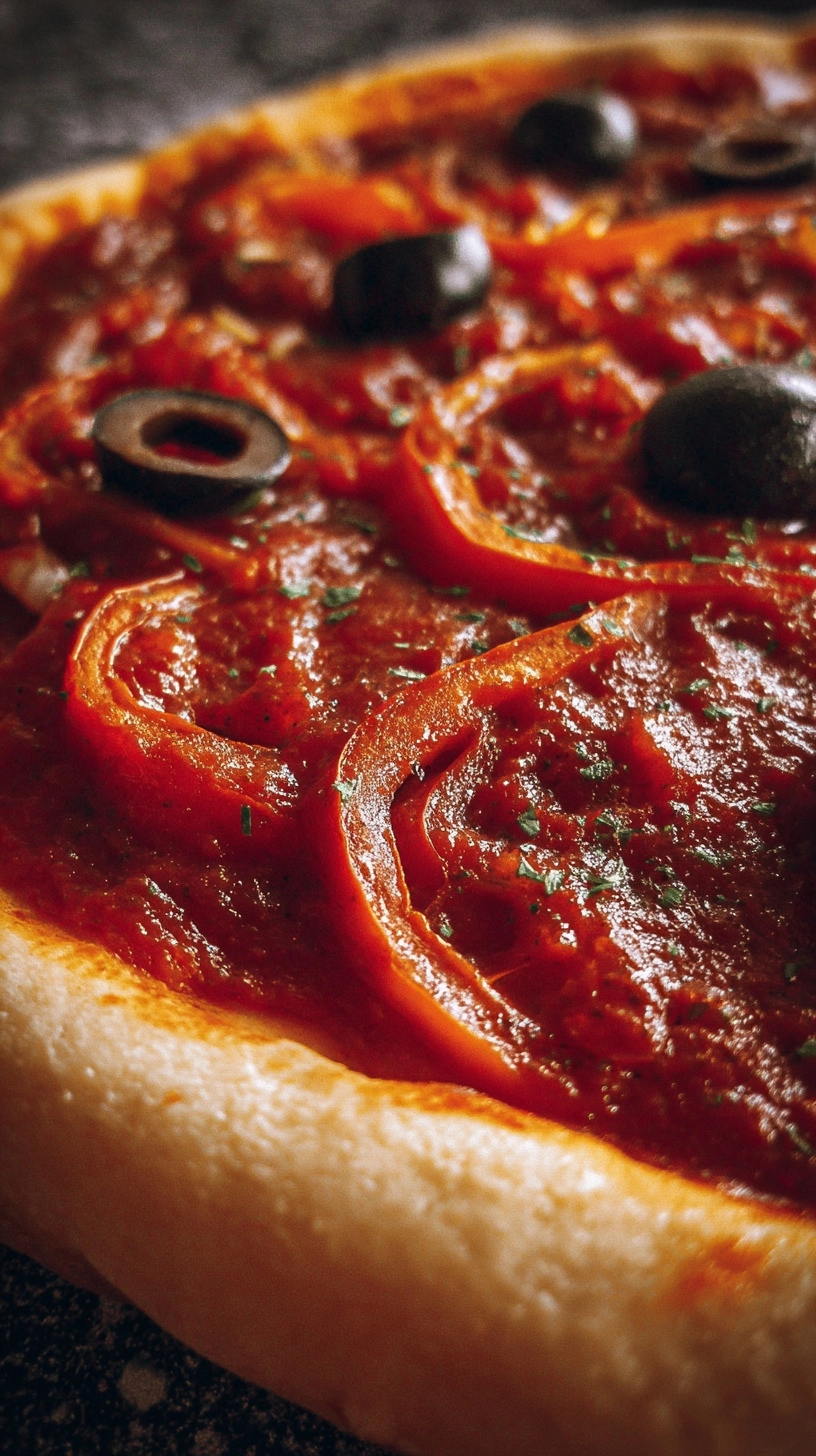
Veggie-Packed Variation: Incorporate finely grated carrots and bell peppers during the sautéing stage for added nutrients and natural sweetness.
Herb-Forward Version: Double the fresh herbs and add fresh thyme or rosemary for Mediterranean complexity.
Serving Suggestions
This versatile pizza sauce homemade creation extends far beyond traditional pizza applications. Use it as a base for shakshuka, toss with pasta for quick weeknight dinners, or serve as a sophisticated dipping sauce for artisanal bread. For pizza perfection, allow sauce to cool completely before spreading—this prevents soggy crusts and ensures even distribution.
Create gourmet white pizza variations by mixing 2 tablespoons of this sauce with ricotta cheese, or use it as a base for homemade calzones and stromboli.
Common Mistakes to Avoid
Over-Seasoning Early: Season gradually throughout cooking rather than adding all herbs at once, which can create bitter, overpowering flavors.
Using Poor-Quality Tomatoes: Invest in San Marzano or high-grade whole tomatoes—the difference is remarkable and worth the extra cost.
Rushing the Simmer: Quick cooking produces watery, underdeveloped sauce. Patience during the simmering process concentrates flavors beautifully.
Skipping the Acid Balance: That final splash of vinegar brightens the entire sauce profile—don’t skip this crucial step.
Applying Hot Sauce to Dough: Always cool sauce completely before using to prevent soggy pizza crusts.
Storing Tips for the Recipe
Refrigerator Storage: Transfer cooled sauce to airtight glass containers and refrigerate for up to 7 days. The flavors actually improve after 24 hours.
Freezer Storage: Portion sauce into ice cube trays for convenient single-serving portions, then transfer frozen cubes to freezer bags. Keeps for up to 6 months.
Make-Ahead Strategy: Double or triple the recipe and freeze portions for quick pizza nights. Thaw overnight in refrigerator before using.
Jar Preservation: For longer storage, process in sterilized jars using proper canning techniques for shelf-stable storage up to 18 months.
FAQs
Q: Can I use fresh tomatoes instead of canned?
A: Yes, but choose peak-season tomatoes. You’ll need about 3 pounds, blanched and peeled. Canned San Marzanos often provide more consistent results year-round.
Q: How thick should the final sauce be?
A: Aim for a consistency that coats the back of a spoon but isn’t paste-like. It will thicken slightly when cooled.
Q: Can I make this sauce in a slow cooker?
A: Absolutely! Combine all ingredients except fresh herbs in your slow cooker, cook on low for 4-6 hours with the lid slightly ajar to allow moisture to escape.
Q: What’s the best way to crush tomatoes by hand?
A: Squeeze each tomato gently through your fingers over a bowl, breaking them into irregular, bite-sized pieces while removing any tough stem areas.
Q: How do I know when the sauce is properly reduced?
A: The sauce should have reduced by about one-third of its original volume and should hold its shape briefly when stirred before settling back to level.