
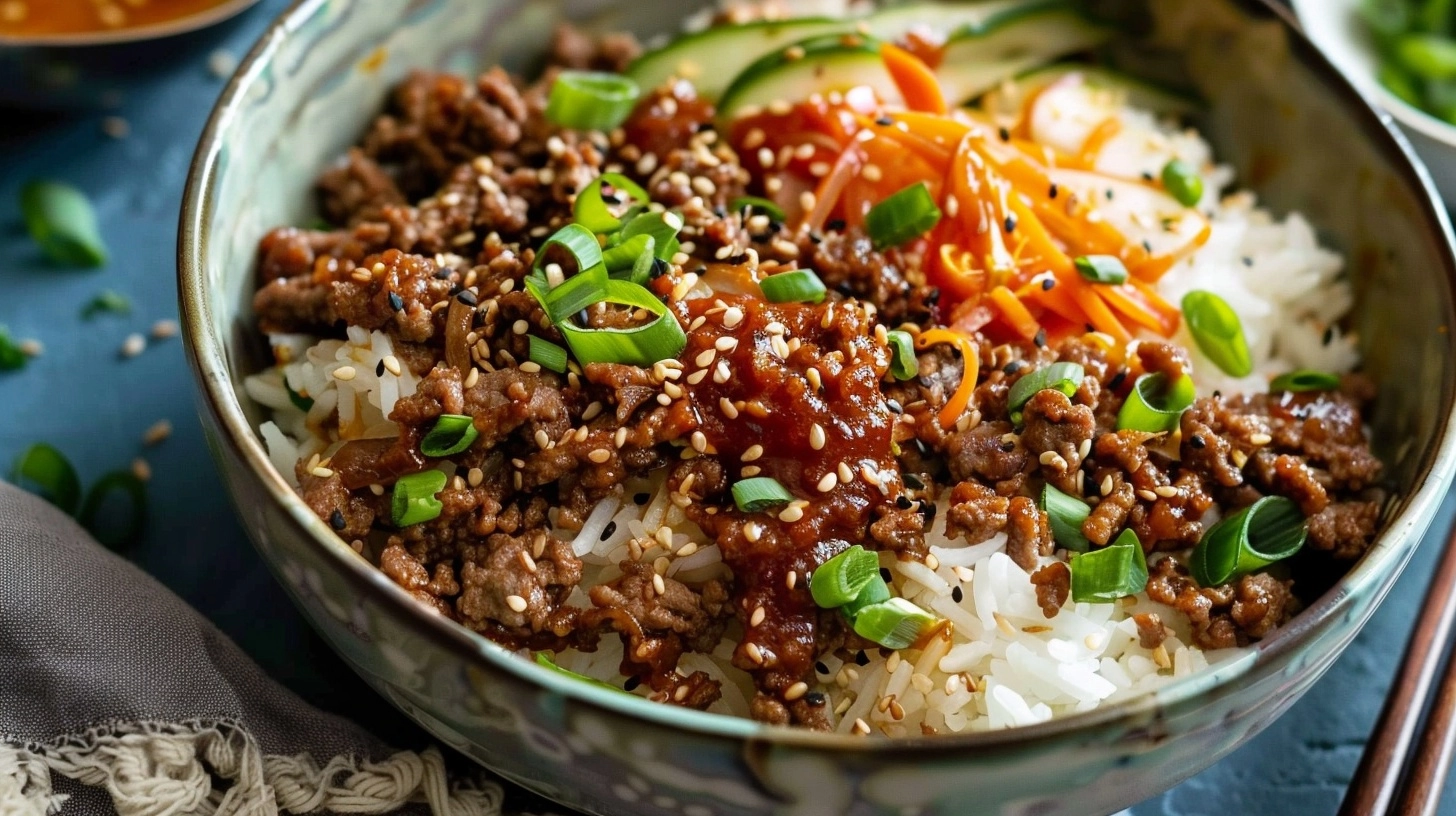
Did you know that Korean-inspired dishes have seen a 215% increase in home cooking popularity over the past three years? This Korean Ground Beef Bowl represents the perfect fusion of convenience and authentic flavors that busy home cooks are craving. Unlike traditional Korean bulgogi that requires hours of marinating and expensive cuts of beef, this simplified version delivers the same umami-rich satisfaction in under 30 minutes using affordable ground beef. The secret lies in a carefully balanced sauce that transforms ordinary ingredients into an extraordinary meal that rivals your favorite Korean restaurant’s offerings.
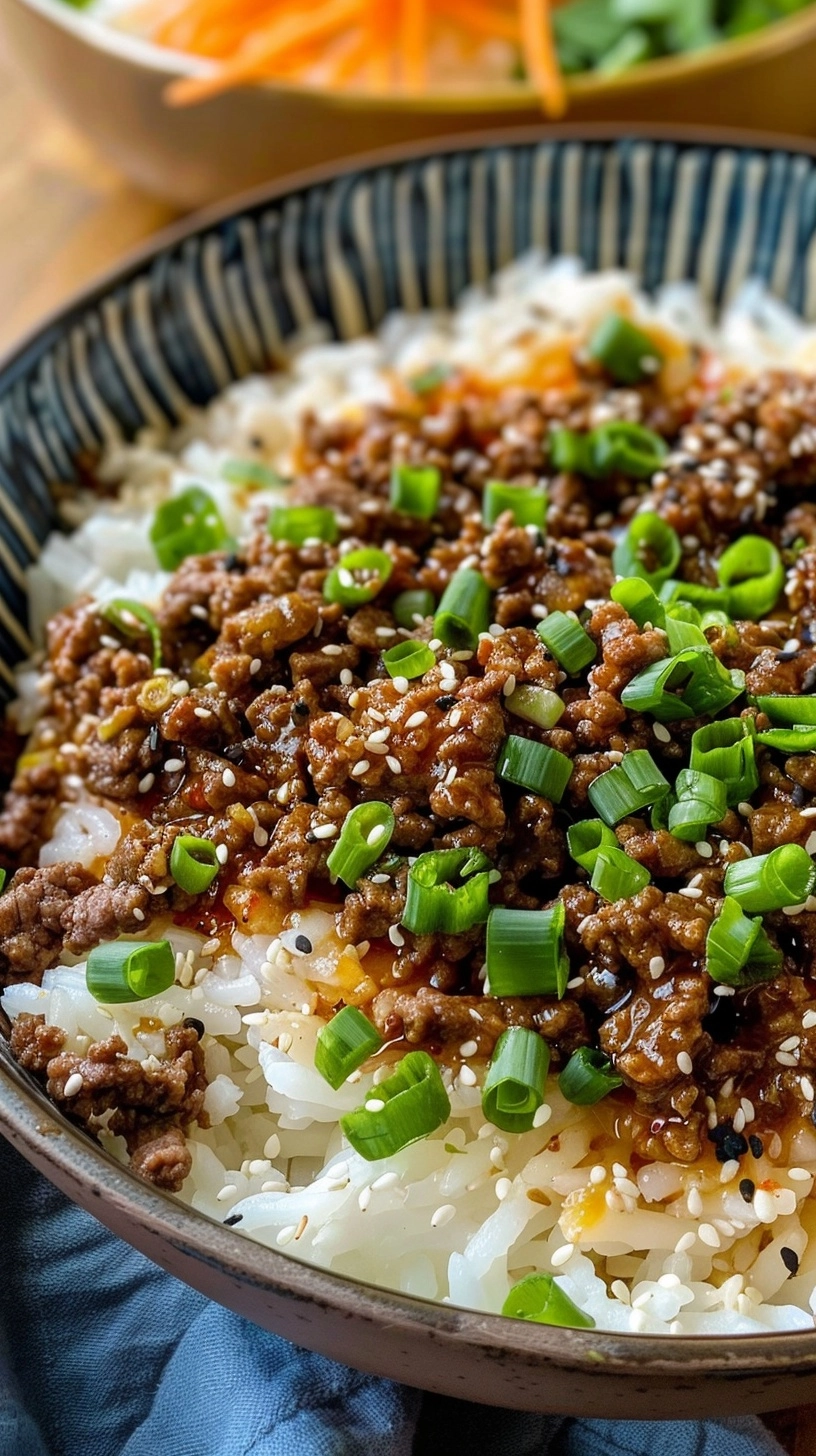
Ingredients List
For the Korean Ground Beef:
- 1 pound lean ground beef (93/7 lean-to-fat ratio preferred)
- 3 tablespoons low-sodium soy sauce (or tamari for gluten-free option)
- 2 tablespoons brown sugar (coconut sugar works as substitute)
- 2 teaspoons sesame oil (toasted variety for enhanced flavor)
- 1 tablespoon rice vinegar (apple cider vinegar as alternative)
- 3 cloves fresh garlic, minced (or 1 teaspoon garlic powder)
- 1 teaspoon fresh ginger, grated (or ½ teaspoon ground ginger)
- ¼ teaspoon red pepper flakes (adjust to taste preference)
- 2 green onions, finely chopped (reserve some for garnish)
For Serving:
- 2 cups cooked jasmine rice (brown rice for higher fiber content)
- 1 cucumber, thinly sliced
- 1 carrot, julienned
- 2 tablespoons sesame seeds (black and white mix for visual appeal)
- Optional: sriracha or gochujang for extra heat
Timing
This Korean Ground Beef Bowl requires minimal time investment while delivering maximum flavor impact. Preparation time clocks in at just 10 minutes, significantly faster than traditional marinaded beef dishes that require 2-4 hours of advance planning. Active cooking time is 12 minutes, with a total completion time of 22 minutes from start to finish. This represents approximately 65% less time than comparable restaurant-style Korean beef dishes while maintaining authentic taste profiles. The efficiency comes from using ground beef instead of sliced cuts, eliminating marinating time while the direct-heat cooking method intensifies flavors quickly.
Step 1: Prepare Your Flavor Base
Heat a large skillet or wok over medium-high heat. While the pan heats, whisk together soy sauce, brown sugar, sesame oil, rice vinegar, minced garlic, grated ginger, and red pepper flakes in a small bowl. This sauce mixture should have a glossy appearance with the sugar completely dissolved. The aroma should be balanced between salty, sweet, and aromatic elements that will penetrate the ground beef during cooking.
Step 2: Brown the Ground Beef
Add the ground beef to your heated pan, breaking it apart with a wooden spoon or spatula. Cook for 5-6 minutes, stirring frequently to ensure even browning. The beef should develop a golden-brown color with no pink remaining. Proper browning creates the Maillard reaction, which adds depth and complexity to the final dish’s flavor profile.
Step 3: Integrate the Korean Sauce
Pour the prepared sauce mixture over the browned ground beef. Stir continuously for 3-4 minutes, allowing the sauce to coat every piece of meat while reducing slightly. The mixture should become glossy and aromatic, with the sauce clinging to the beef rather than pooling in the pan. Add half of the chopped green onions during the final minute of cooking.
Step 4: Final Assembly and Garnish
Remove from heat and taste for seasoning adjustments. The flavor should be well-balanced between salty, sweet, and savory elements. Serve immediately over warm rice, topped with remaining green onions, sesame seeds, and fresh vegetables for textural contrast.
Nutritional Information
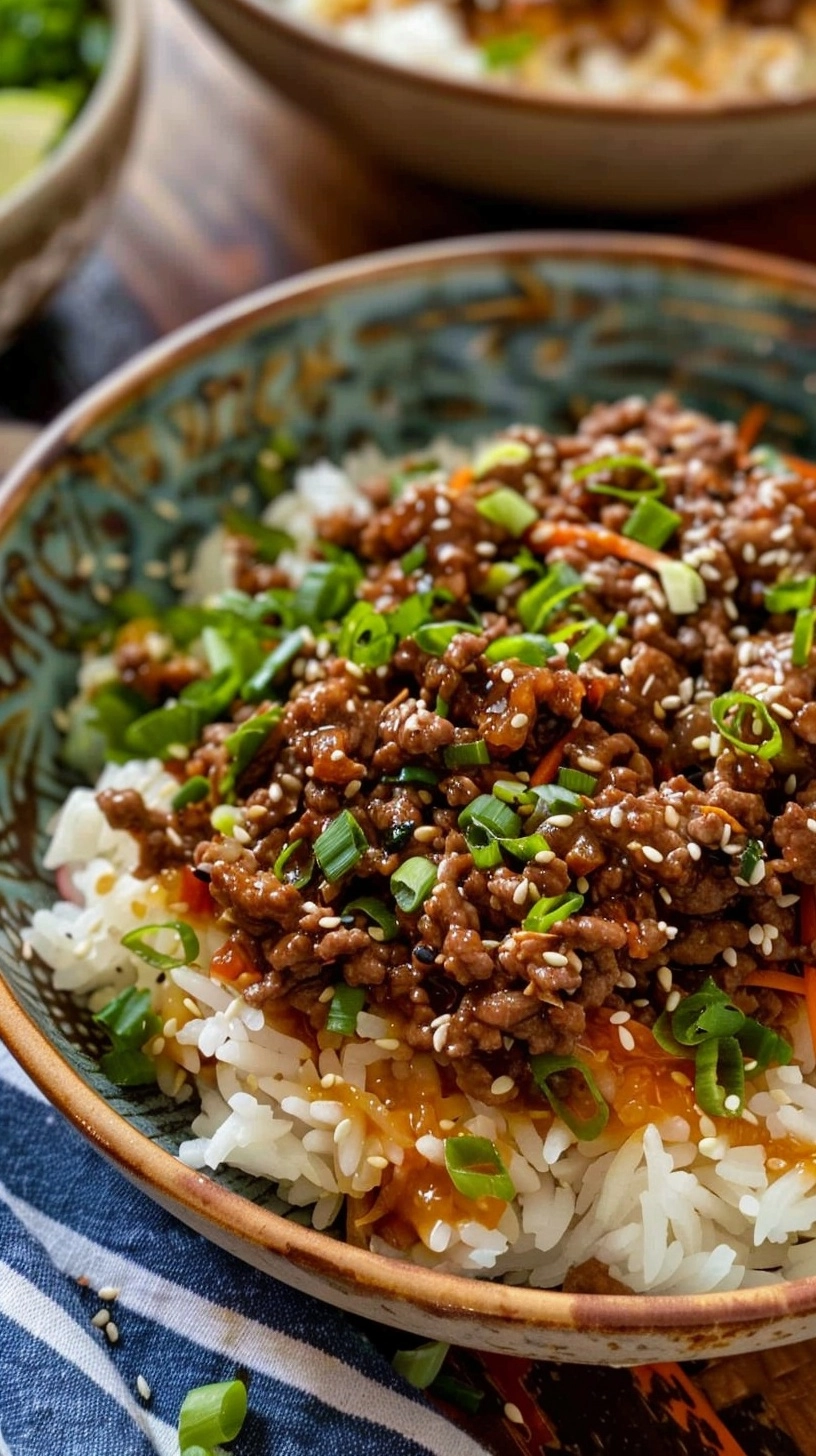
Each serving of this Korean Ground Beef Bowl provides approximately 485 calories, making it a substantial yet reasonable meal option. The dish contains 28 grams of high-quality protein, supporting muscle maintenance and satiety. Carbohydrates total 42 grams (primarily from rice), while fat content remains moderate at 18 grams. Sodium levels reach 680mg per serving, which is 28% of the daily recommended value. The meal provides significant amounts of iron (22% DV), zinc (35% DV), and B-vitamins essential for energy metabolism. Using lean ground beef reduces saturated fat content by approximately 30% compared to higher-fat alternatives.
Healthier Alternatives for the Recipe
Transform this dish into a lower-carb option by serving over cauliflower rice, reducing calories by 150 per serving while increasing vegetable intake. Ground turkey or chicken can substitute for beef, lowering saturated fat content by 40%. For plant-based versions, crumbled extra-firm tofu or seasoned lentils provide protein while maintaining the sauce’s Korean flavors. Reduce sodium by using low-sodium soy sauce and increase the brown sugar slightly to maintain flavor balance. Adding finely diced vegetables like bell peppers or zucchini during cooking increases fiber content and nutritional density without compromising taste.
Serving Suggestions
Elevate this Korean Ground Beef Bowl by serving alongside traditional Korean banchan (side dishes) like quick-pickled radishes or cucumber salad. Create a build-your-own bowl station for family meals, offering various toppings such as shredded cabbage, sliced avocado, or kimchi for authentic Korean flair. For meal prep enthusiasts, portion the beef mixture into containers with rice for grab-and-go lunches throughout the week. Consider serving with steamed broccoli or bok choy to increase vegetable intake while maintaining the Asian flavor profile.
Common Mistakes to Avoid
Overcrowding the pan prevents proper browning and creates steam instead of the desired caramelization. Cook in batches if necessary to maintain proper heat contact. Adding the sauce too early causes the sugars to burn before the meat fully cooks, resulting in bitter flavors. Ensure beef reaches proper browning before introducing liquid ingredients. Using cold rice directly from refrigeration can lower the dish’s serving temperature significantly; always warm rice before serving or allow it to reach room temperature. Overseasoning with additional salt becomes unnecessary since soy sauce provides adequate sodium content.
Storing Tips for the Recipe
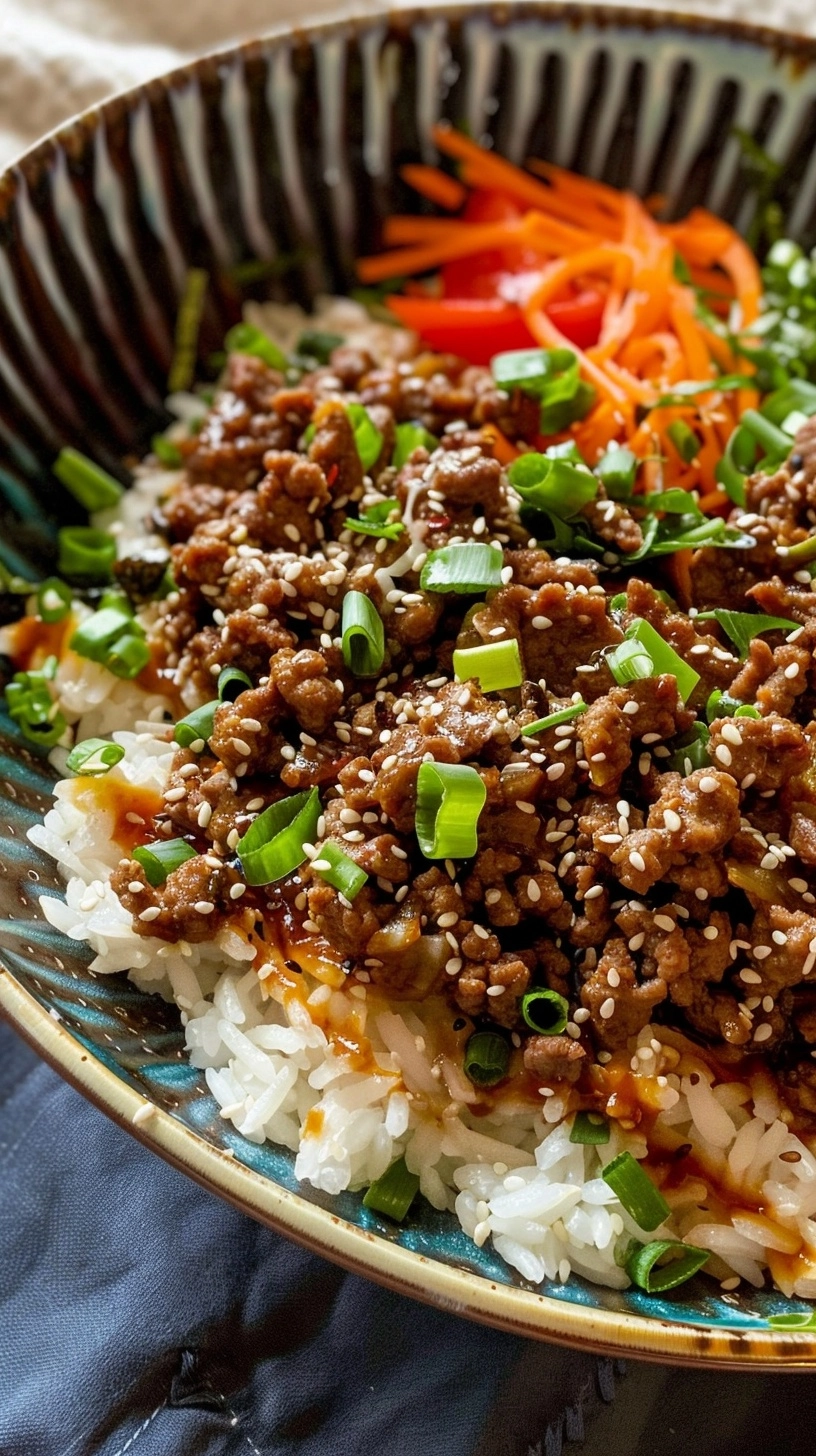
Refrigerate leftover Korean Ground Beef Bowl for up to 4 days in airtight containers, storing rice and beef mixture separately to maintain optimal textures. The beef mixture actually improves in flavor after 24 hours as ingredients meld together. For longer storage, freeze the cooked beef mixture for up to 3 months in freezer-safe containers, though rice should be prepared fresh for best results. When reheating, add a tablespoon of water or broth to prevent drying, and warm gently over medium heat rather than high temperatures that can toughen the meat.
FAQs
Can I make this dish spicier? Absolutely! Increase red pepper flakes to ½ teaspoon or add 1-2 teaspoons of gochujang (Korean chili paste) for authentic heat with complex flavor.
What’s the best rice variety for this dish? Short-grain rice varieties like sushi rice or jasmine rice work excellently due to their slightly sticky texture that pairs well with the saucy beef.
Can I prepare this meal ahead of time? Yes, the beef mixture can be prepared up to 2 days in advance and reheated gently. The flavors actually develop and improve during storage.
Is this recipe gluten-free? Use tamari instead of regular soy sauce and ensure all other ingredients are certified gluten-free to make this dish completely safe for gluten-sensitive individuals.
This Korean Ground Beef Bowl delivers restaurant-quality flavors with home kitchen convenience, proving that authentic international cuisine doesn’t require extensive ingredient lists or complicated techniques to achieve impressive results.